01 · The problem
Canada's aging-care system is under pressure, and care is often too reactive.
OrrO began with a systemic problem: Canada is facing a growing elderly population, overwhelmed long-term care capacity, and in-home care costs that many families cannot sustain.
Beyond cost and access, the project also responded to the emotional side of aging. Many seniors want independence, dignity, and connection, but families and care workers often do not have enough visibility to notice routine, health, or safety changes before something goes wrong.
Seniors are projected to make up a quarter of Canada's population.
In-home care can become financially inaccessible for many families.
Isolation and feeling discarded can worsen health, safety, and cognitive decline.
02 · Research and opportunity
The research pointed to a monitoring gap, not just a product gap.
Our team combined 1:1 semi-structured interviews with Registered Nurses and PSWs, secondary research on aging in Canada, affinity mapping, and research into space technologies that could be applied to future care contexts.
The strongest pattern was that frontline care is often forced to be reactive. Care workers cannot always provide consistent, specialized attention when they are stretched across many patients, while families may only learn something changed after a fall, missed medication, or emergency.
Support should not rely on seniors manually reporting every change or managing complex screens.
The system had to prioritize meaningful trends, task status, and changes in routine instead of overwhelming people with raw data.
The product needed to feel like a companion and care bridge, not surveillance or a cold medical device.
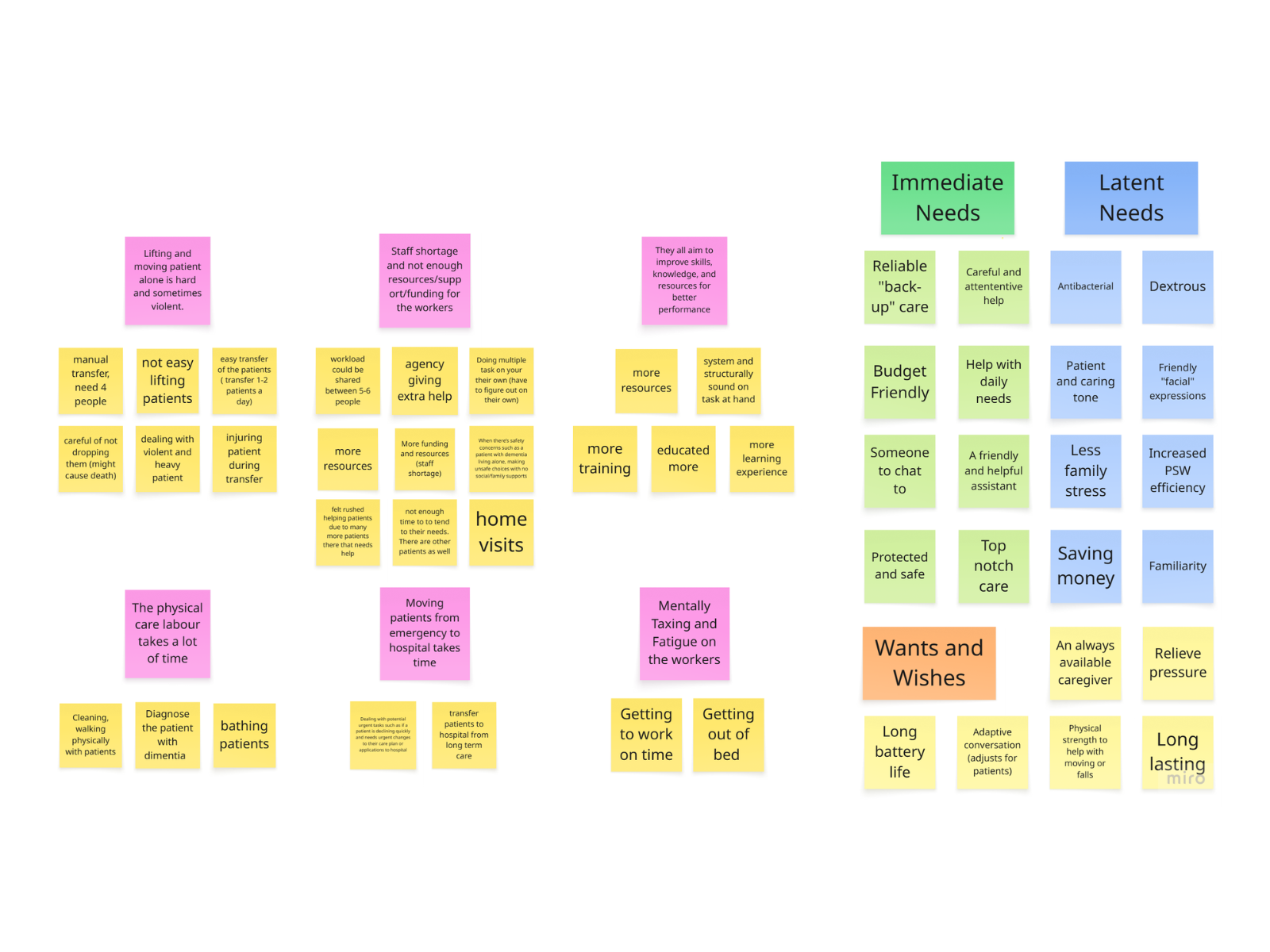 images/orro/orro-affinity-map.png
Research themes grouped around monitoring gaps, caregiver needs, and proactive care opportunities.
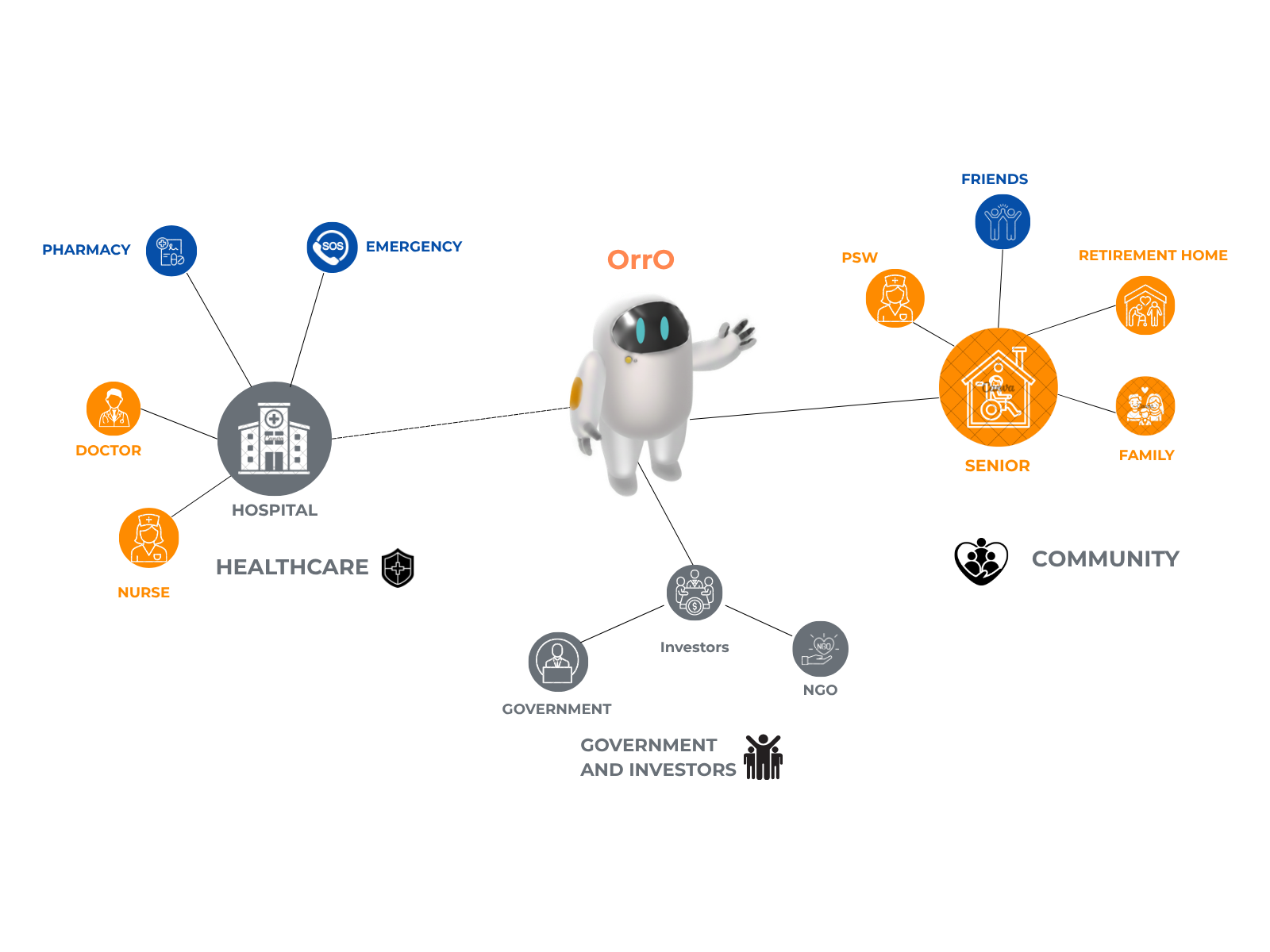 images/orro/orro-design-ecosystem.png
The relationship between OrrO, the mobile app, caregivers, family, healthcare providers, and the older adult.
03 · Space 2050 technology direction
Space technology helped us imagine care that is autonomous, precise, and less invasive.
Because the brief was set in Space 2050, the concept was built around technologies used or inspired by extreme environments, where monitoring, autonomy, precision, and reliability matter.
Instead of designing a normal smart-home app, we explored how future care could combine contactless sensing, wearable vitals, advanced diagnostics, robotic assistance, antimicrobial materials, and AI-supported decision making.
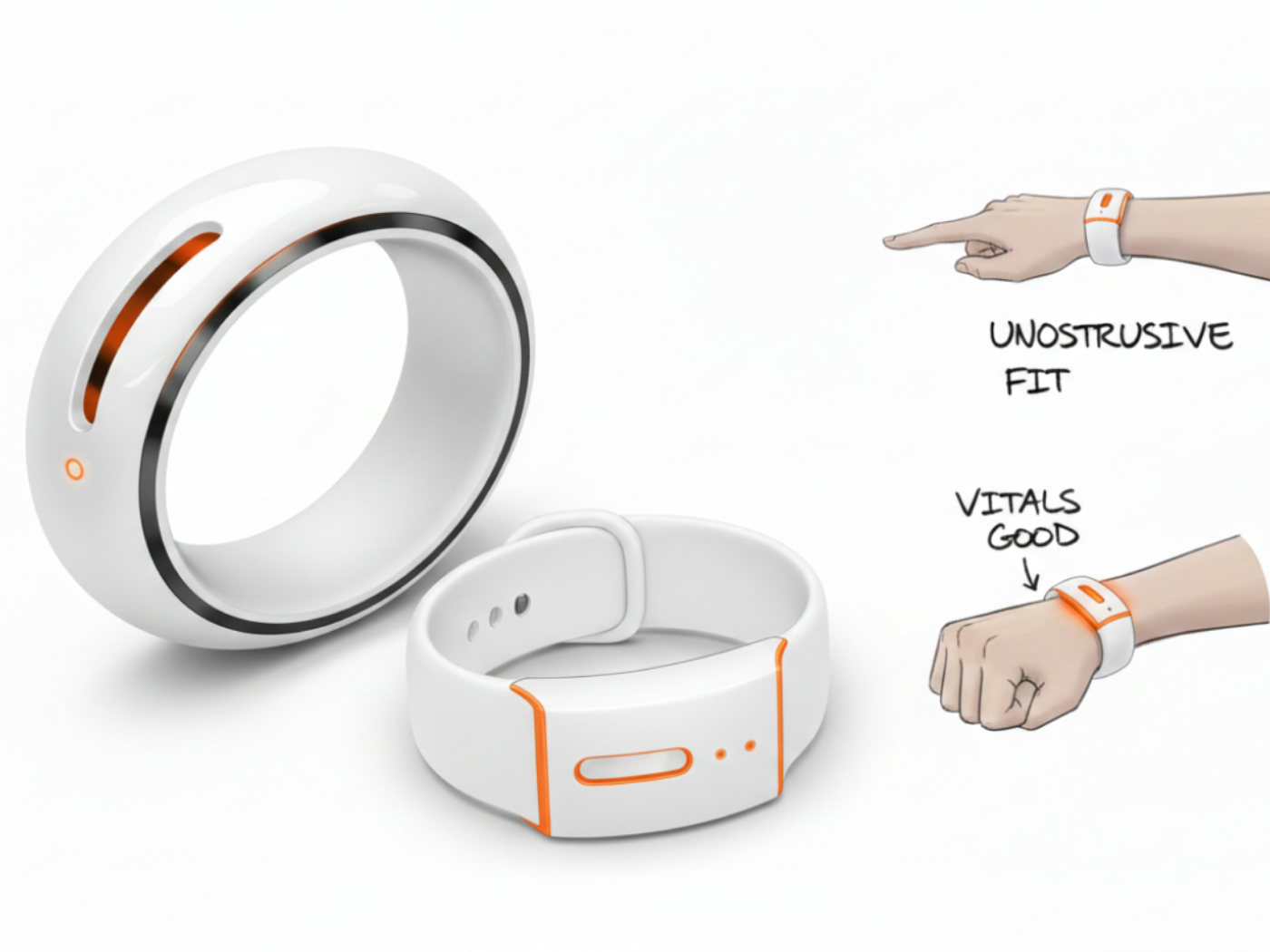
Wearable vitals tracking inspired continuous health visibility.
Contactless monitoring inspired non-invasive heart and breathing checks.
Portable ultrasound inspired accessible diagnostic support outside clinical spaces.
Tele-robotic precision inspired delicate robotic assistance and movement support.
Antimicrobial materials inspired safer surfaces for long-term home care.
AI clinical decision support inspired proactive interpretation of health signals.
04 · Collaboration across UX and Industrial Design
The project worked because the robot and the app were designed as one system.
My contribution sat across research, concept development, and the digital product experience. I collaborated on the product's behaviour, care functions, visual direction, and system logic, and was one of the core app UI/UX designers shaping the mobile app structure, screen layouts, and high-fidelity interface.
The Industrial Design students led the robot sketching and CAD rendering. Their physical exploration helped translate the shared concept into OrrO's companion form, while the UX work defined how the app, robot, and care circle connected as one system.
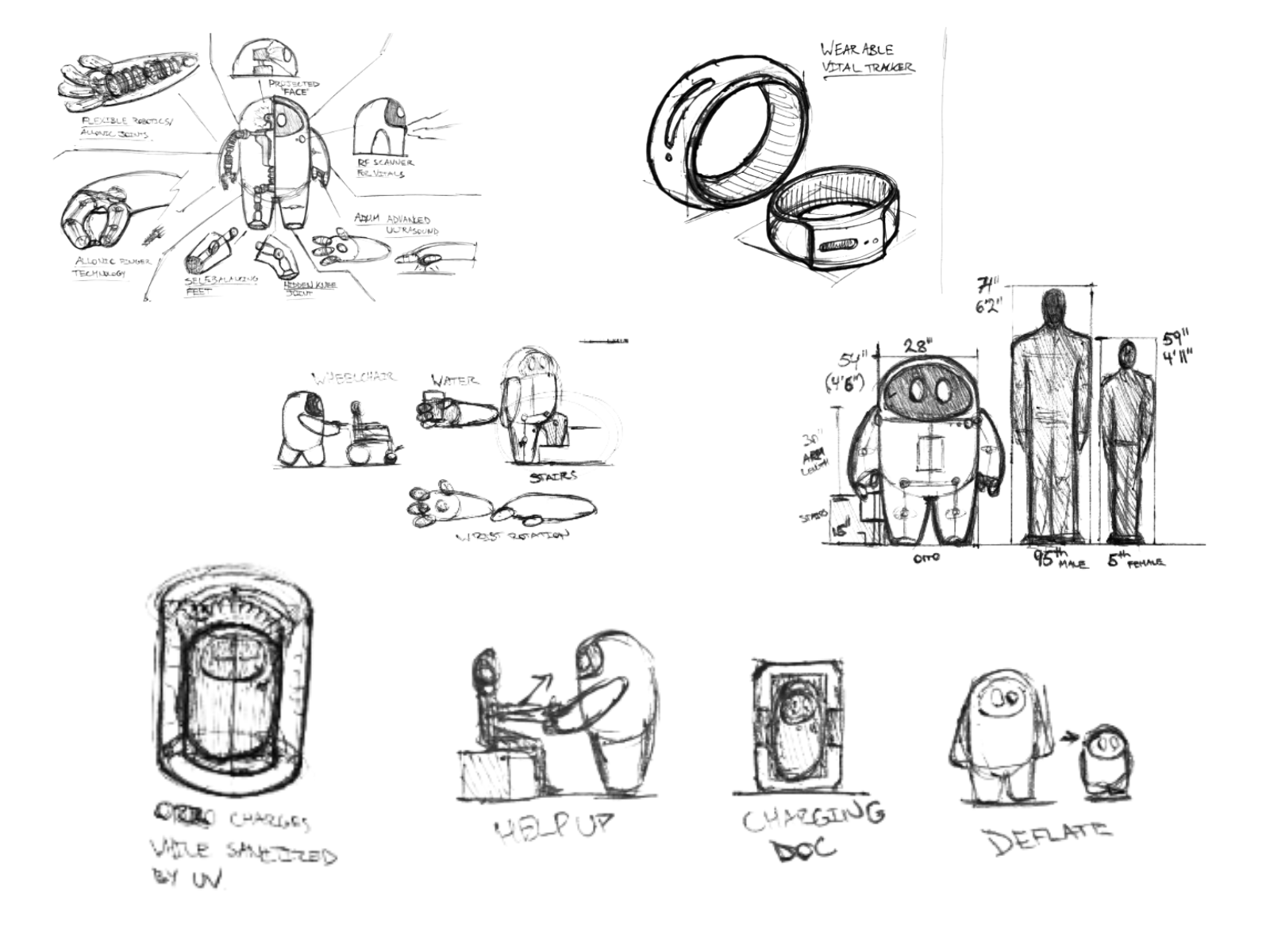
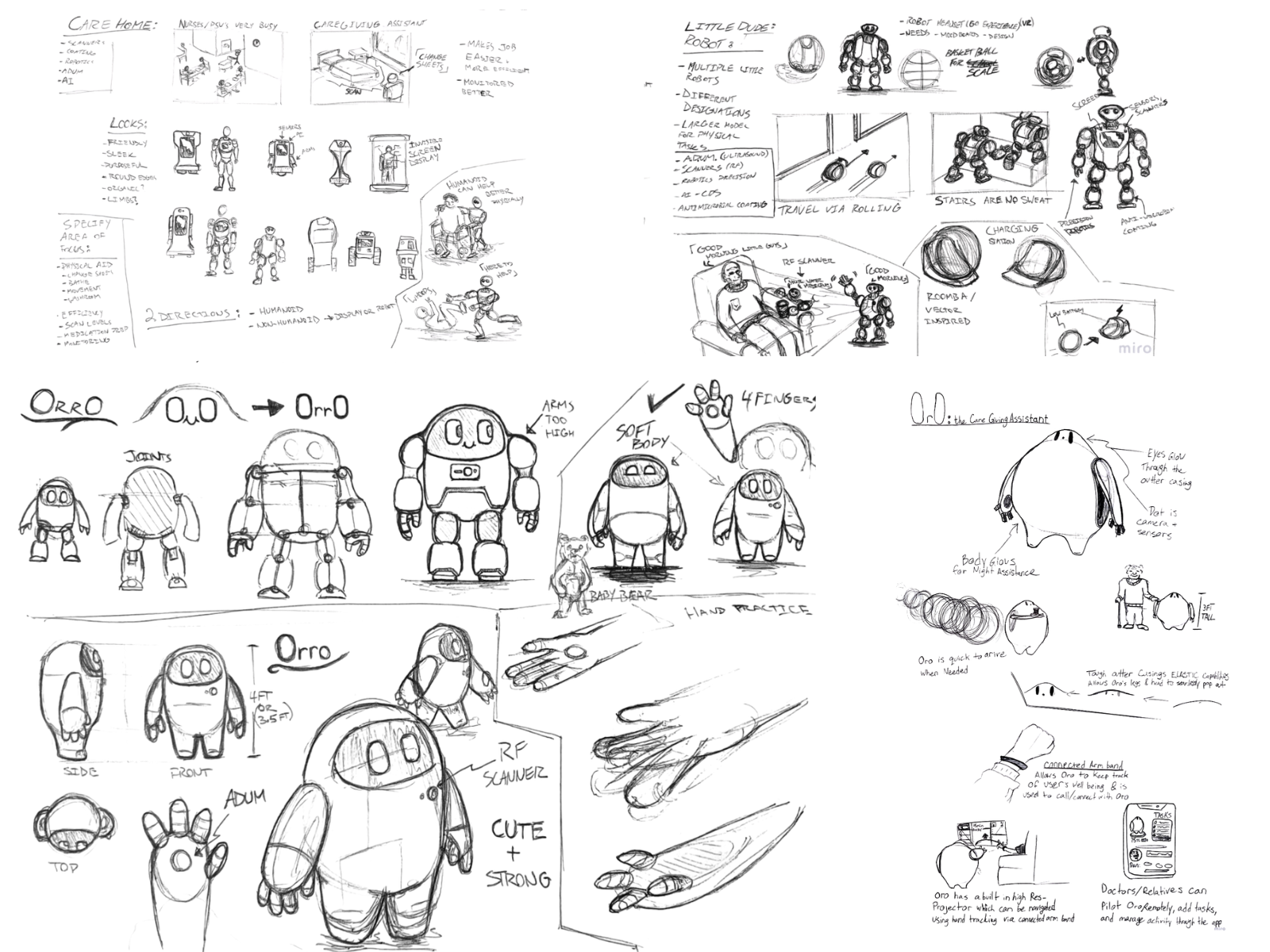 images/orro/orro-concept-sketches.png
Included here to show how the shared UX and ID concept translated into OrrO's physical form.
05 · Physical robot + care ecosystem
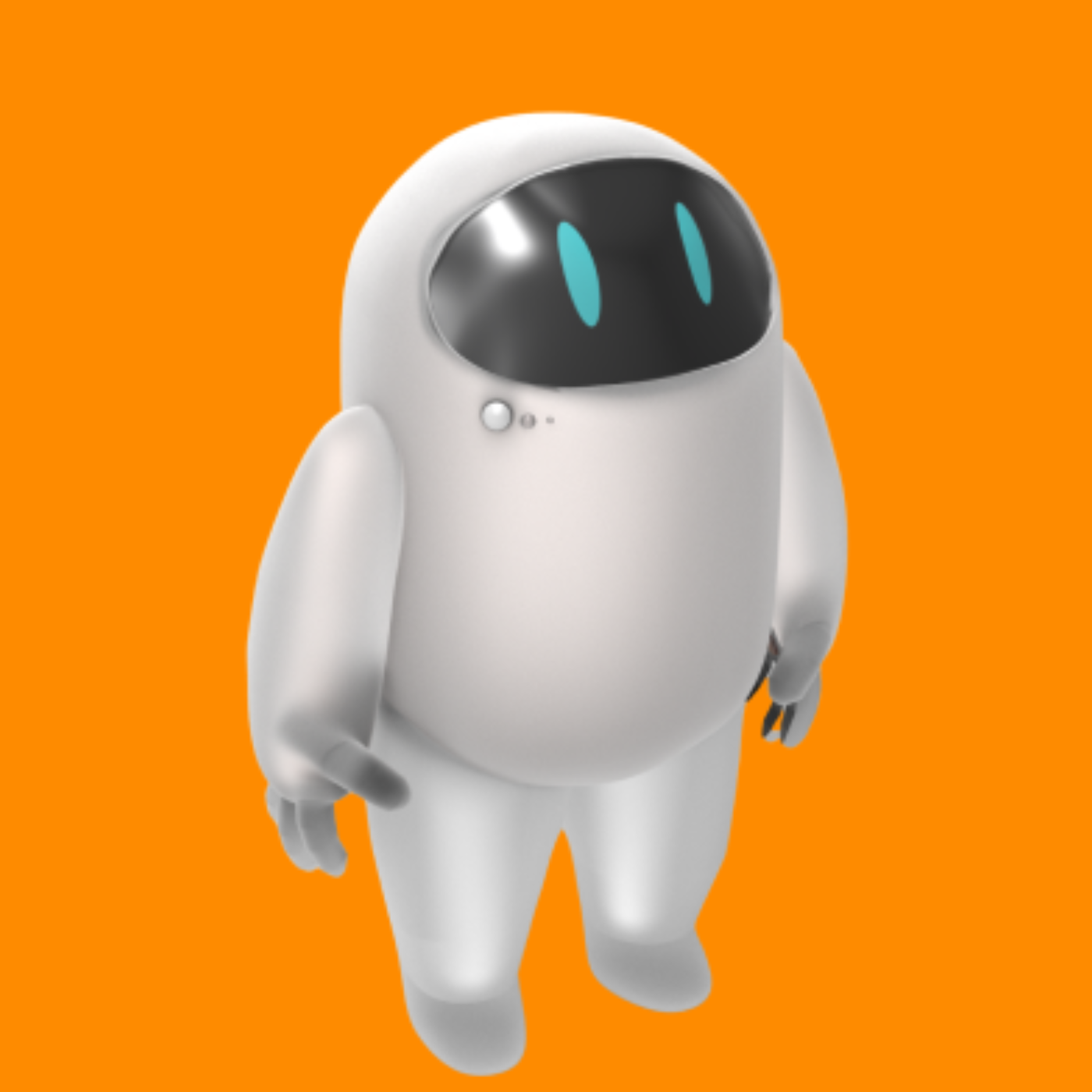
OrrO was designed as a companion, monitor, mobility support, and care bridge.
The robot concept supported physical assistance, social connection, home monitoring, wellbeing tracking, and communication between older adults, family caregivers, PSWs, and healthcare providers.
The app was the visibility layer for the care circle. It helped organize vitals, current activity, notes, tasks, doctors, medications, emergency information, and robot preferences around the older adult's day-to-day care.
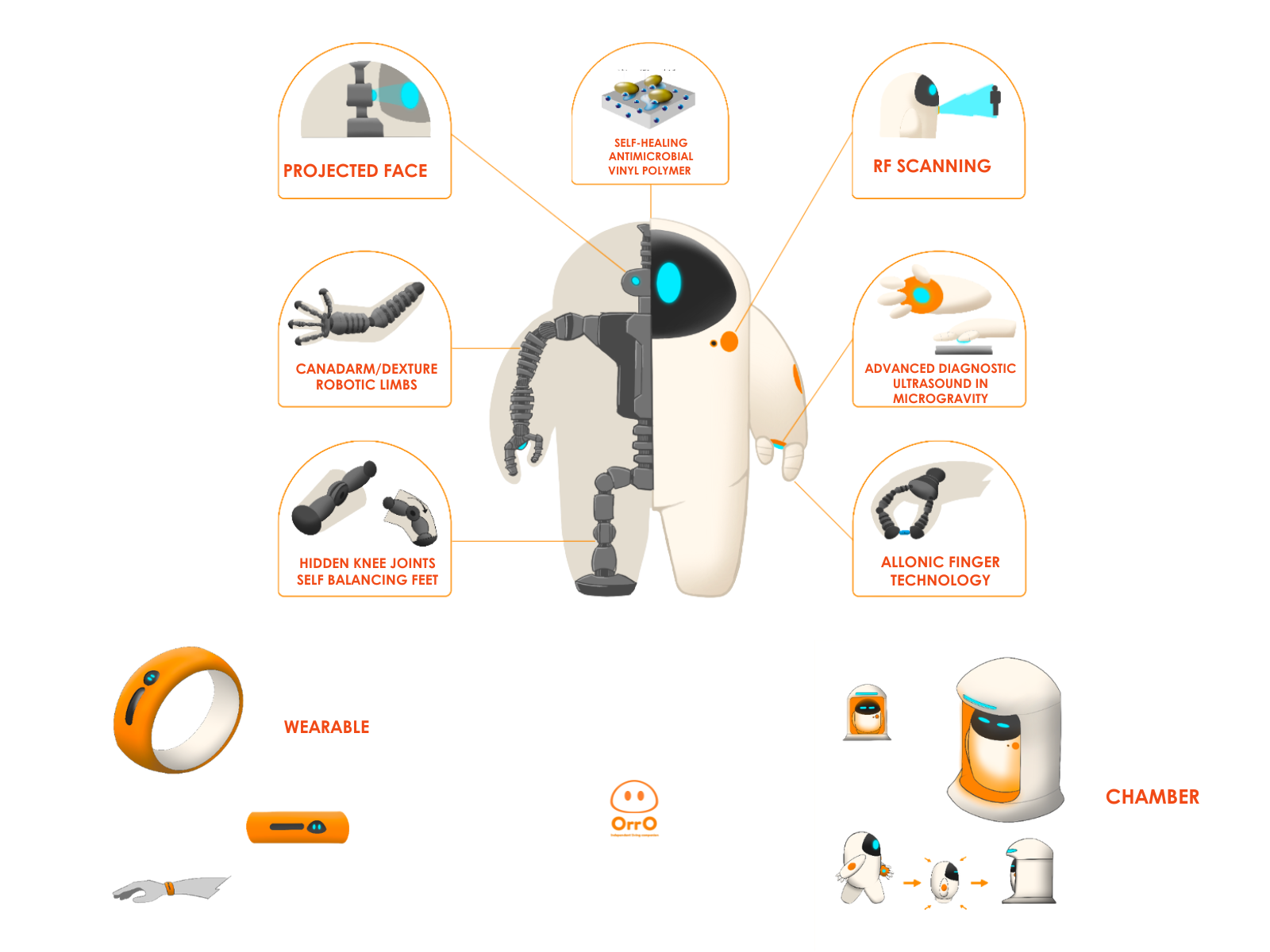
 images/orro/orro-product-concept.png
Robot form, wearable, chamber, sensors, and space-tech inspired features. Physical visualization and CAD were led by the Industrial Design students.
 images/orro/orro-cad-renders.png
Final robot render explorations showing OrrO's form, charging base, screen placement, and calm assistive presence in the home.
Movement, mobility, lifting support, and day-to-day assistance.
Vitals, sleep, mood, feeding, medication, and basic health scanning.
Conversation, reminders, games, voice notes, and connection to family or friends.
Safety awareness, live feed, smart-home support, and emergency escalation.
06 · Designing the app experience
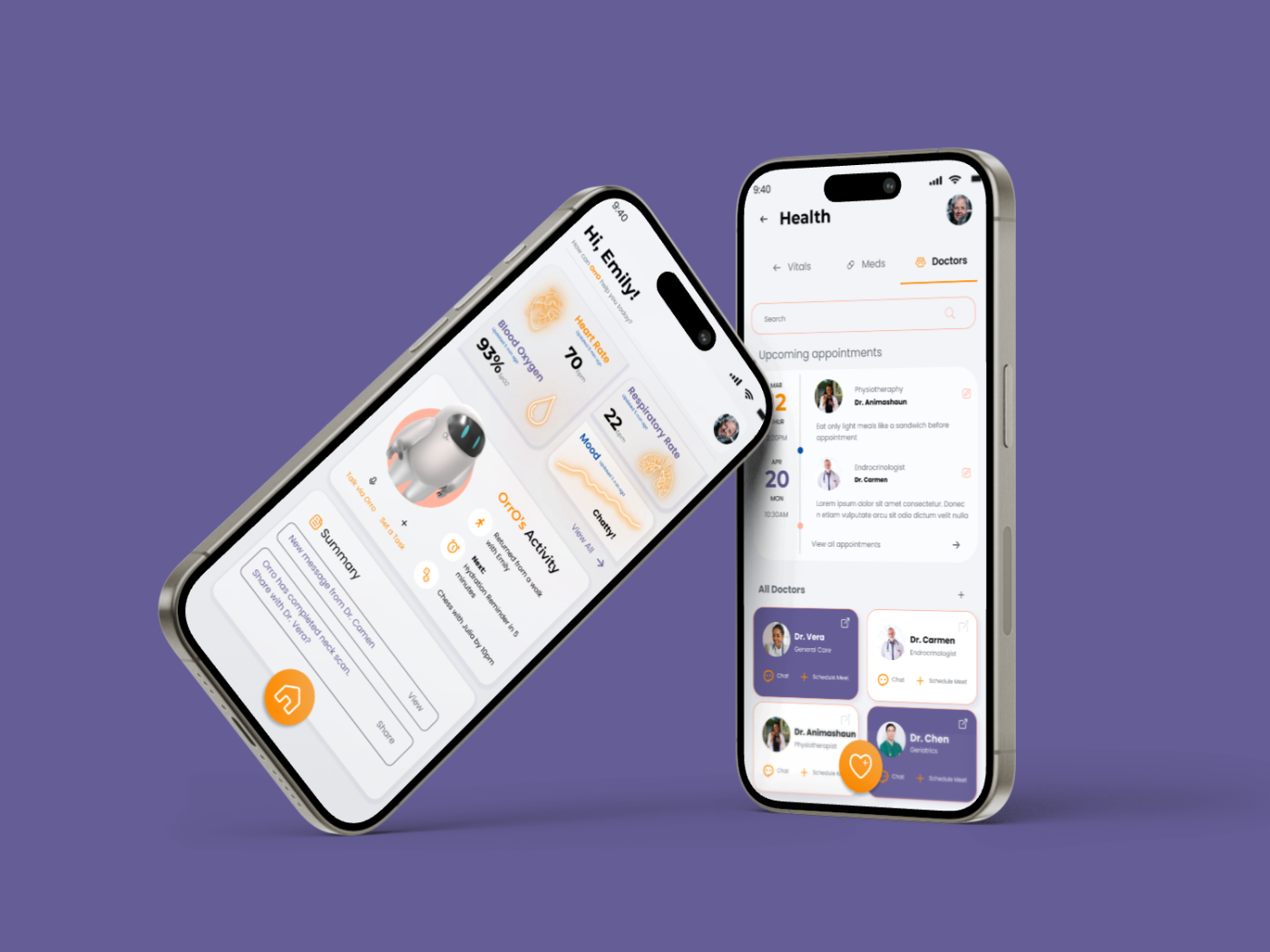
The app became the caregiver-facing control and visibility layer.
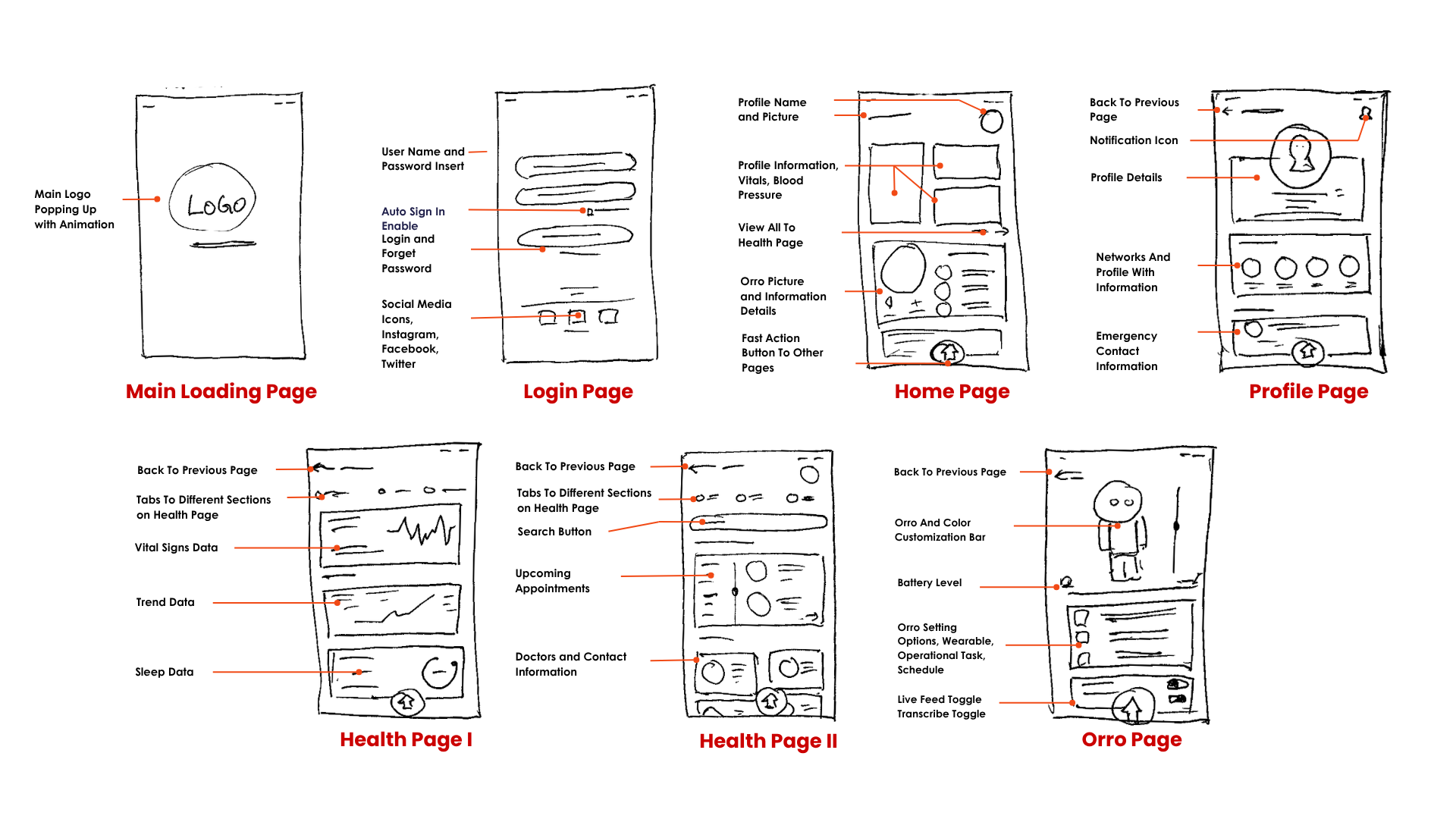
The mobile app organized the companion system around the information caregivers would need most often: current status, health patterns, personal profile details, care network information, doctors, medication, and robot customization.
Instead of designing isolated screens, we treated the app as a care hub that connects the physical companion, the older adult's routine, and the people responsible for support.
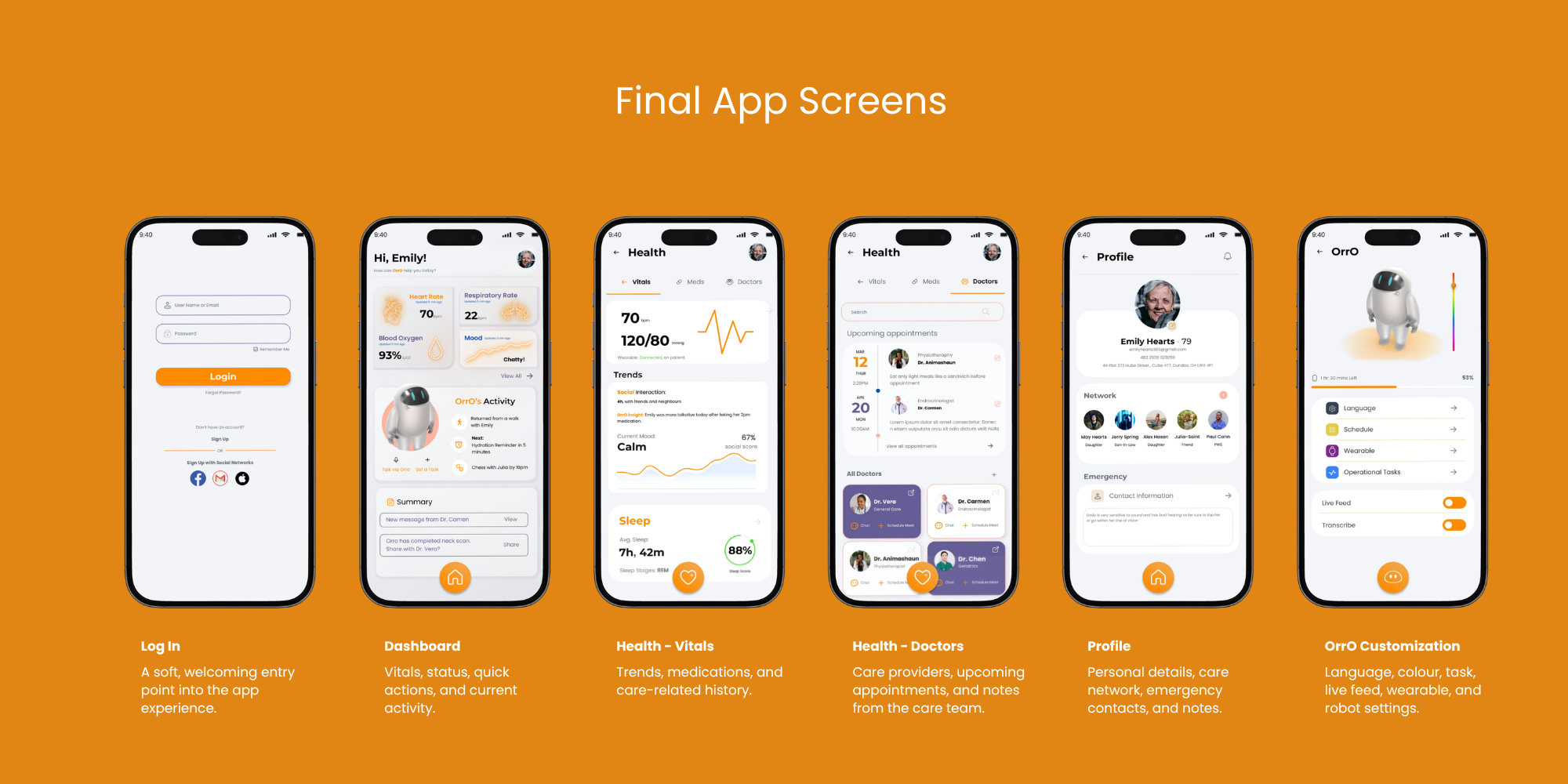
Vitals overview, current activity, quick actions, and daily summary.
Personal information, care network, emergency contacts, and notes.
Vitals trends, medications, doctors, appointments, and care-related history.
Language, colour, tasks, wearable, live feed, and robot-related settings.
 images/orro/orro-sitemap-wireframes.png
07 · Final interface
Warm, clear screens for a high-trust care context.
The interface uses warm neutrals, rounded cards, direct labels, and light backgrounds to make care information feel approachable. The goal was to help caregivers scan quickly without making the product feel clinical or cold.
 images/orro/orro-app-screens.png
Prototype
Explore the OrrO app prototype.
Walk through the interactive Figma prototype for the mobile app experience.
08 · Reflection
This project taught me to design for systems that exist beyond the screen.
OrrO helped me think about UX as part of a physical, social, and technological ecosystem. The app had to support the robot concept, the care context, and the people around the senior.
The biggest lesson was learning how to make UX decisions legible to collaborators who were also thinking about form, sensors, materials, movement, and physical interaction.
Team
UX Design: Chelsea Kelechi, Deborah Soyelu-Aro, Simran Kamboj, Philip Trieu, Mert Agan
Industrial Design: Arik Stuffles, Zach Hatanaka
Interaction Design: Harshitta Dhawan